
What is AirLift?
AirLift is a universal token transfer interface that allows any burn-and-mint tokens to quickly be integrated with a single API.
The current implementation of each token standard (OFT, NTT, ITS, CCT, WarpRoutes, xERC20) requires bespoke parameters for each of the assets being issued on these frameworks. While they leverage standardized validation and transport via the parent protocol, the configuration of security and required data to send and receive is not.
This means that any protocol wanting to leverage these assets as potential routes must manually integrate, test, and potentially update each one in real time to maximize availability for their users. This quickly becomes a nontrivial amount of development work and resource expenditure.
How it works
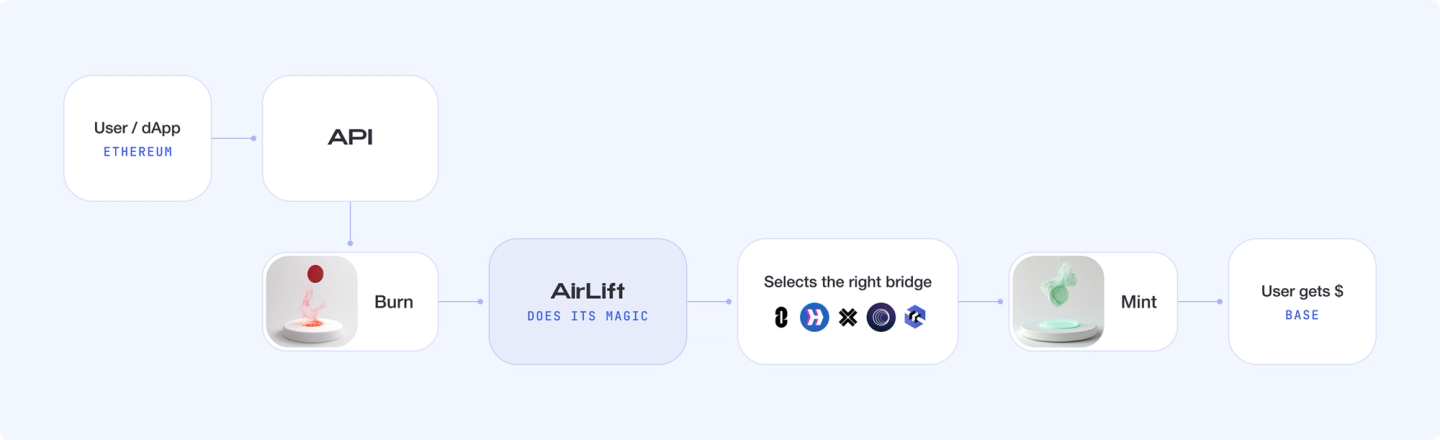
Under the hood, Airlift is a series of smart contract that abstracts the special configurations of each bridge & token standard into a single interface, paired with an API that helps with introspection of these configurations & quoting of routes.
Long tail Assets and Project tokens :
- Solvers might not want to hold inventory of these assets and AirLift still allows execution with zero slippage and provides a cost savings compared to the current experience.
How Airlift solves:
- No Slippage routes: what you send is what you receive ( minus small fees ) Very very low fees, in our research we would be beating the market on lot of the routes by orders of magnitude savings.
- Single interface without interfacing with multiple token contracts and or bridges yourself. Since the routes are burn - mint routes, user provides the liquidity and there is no limit to this operation. Only limitation is user's balance.
- Assuages worries about liquidity at Dex for assets.
Market Challenges Addressed By Airlift
For smaller orders
- Intents and solvers can provide fast execution but begin suffering at larger order sizes outside of the major assets due to inventory management risk and opportunity cost of holding those assets.
- Solvers, when re-balancing inventory cross chain would be able to leverage AirLift for better settlement options.
- Limited liquidity on solver networks making people having to wait incredibly long times to get fills or have to pay very high slippage
- Users experience high slippage because of multiple swaps at Dex. Raking in tons of fees and hurting user experience cross chain.
- People have become accustomed to using intermediary assets like USDT, USDC to transfer assets across chain instead of efficient routes of minting and burning which lot of the tokens support. This requires multiple swaps and gas fees, slippage and also learning multiple tools and interfaces which also adds to security risks.